Transforming Climate Action (TCA), the large research venture engaging researchers at Dalhousie University, Laval University, Memorial University of Newfoundland, and Université du Québec à Rimouski, is reaching the mid-point in its multi-year program. Funded by a $154 million investment from the Canada First Research Excellence fund, this initiative, led by Dalhousie, is addressing wide-ranging ocean-focused questions about the impacts of climate change. Faculty and students in many disciplines are conducting research in collaboration with government departments, non-governmental organizations, international partners, and communities in the Atlantic and Arctic regions of Canada.
On 17-18 September 2026, the researchers met in person and online to discuss strategies and plans for Phase 2 of TCA, present posters about their research, and build further connections across the four universities. Dr. Erin Bertrand, Scientific Director and acting CEO of the Ocean Frontier Institute, led off the two-day event by noting that the ocean, a major driver of climate and coastal livelihoods, is no longer missing from climate conversations in Canada. Dr. Bertrand outlined three key themes that will guide research in TCA’s second phase: 1) resilience (equipping coastal Canadians with the tools and capacity to act and adapt sustainably in a perpetually changing world); 2) stewardship (new understanding of the Arctic-Atlantic gateway, a critical region for the ocean’s uptake of heat and carbon, positions Canada as a global leader in climate research and action); and 3) responsible innovation (economic outcomes for Canada are fueled by robust innovation, application of research, relationships, and regulatory approaches).
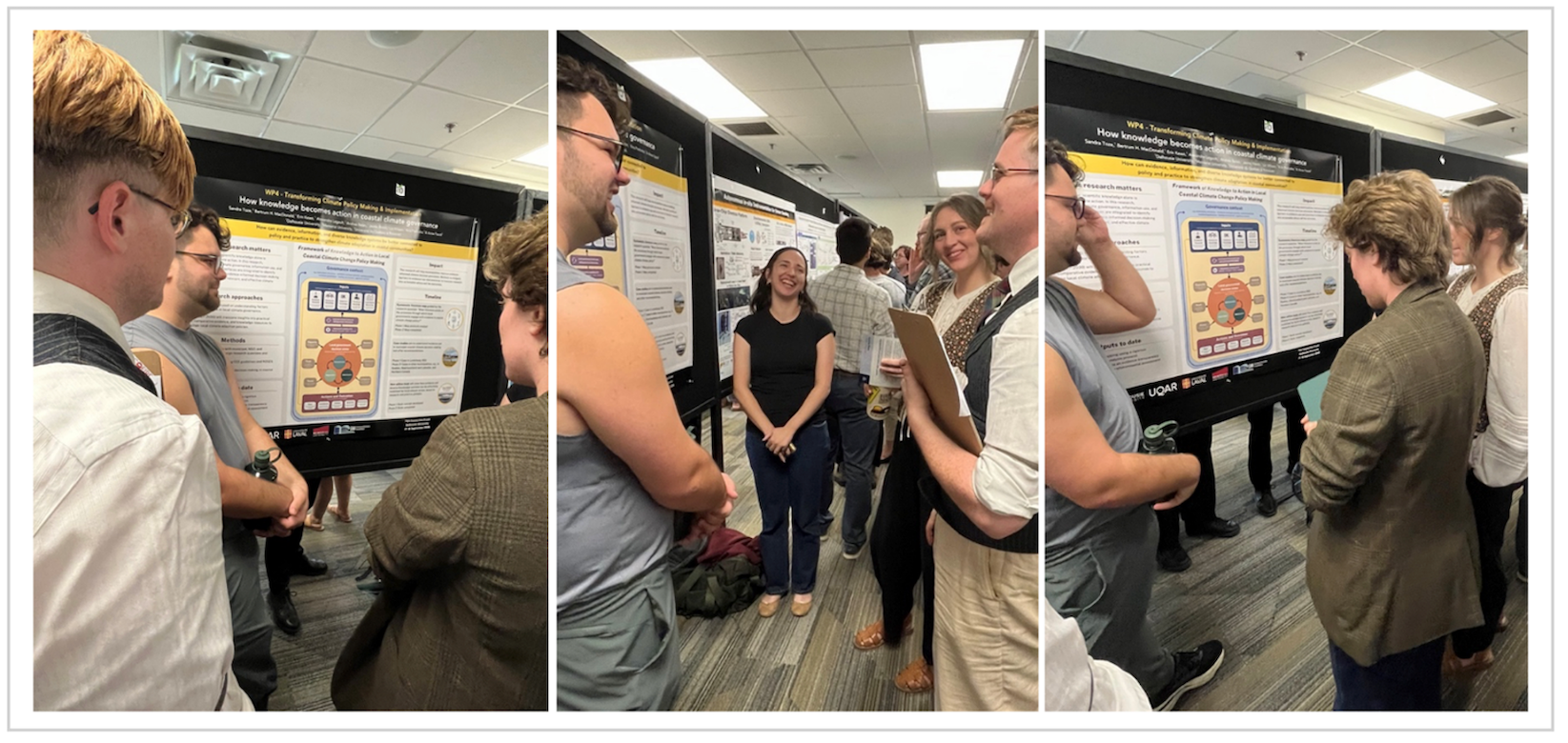
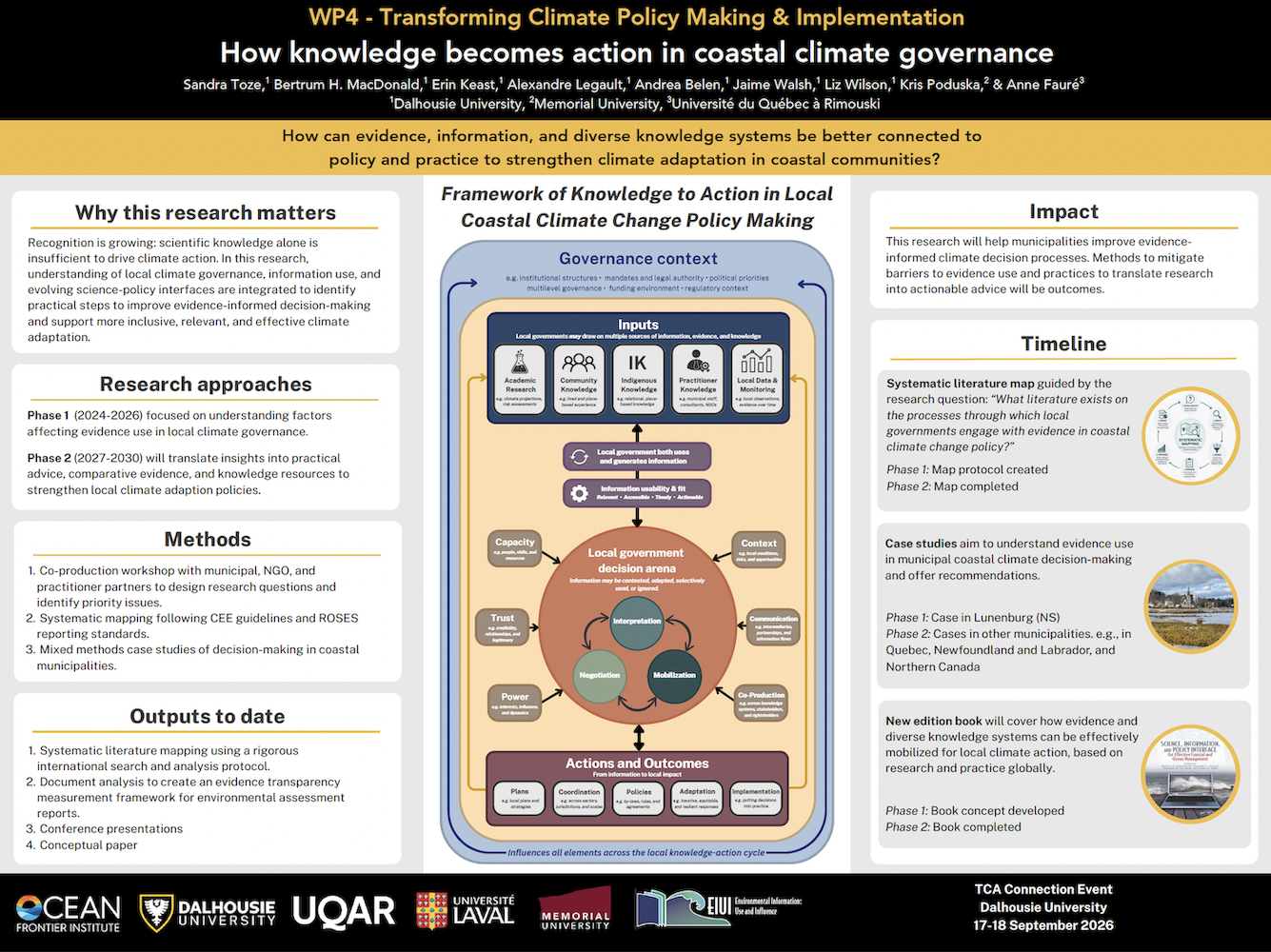
Sometimes, the most valuable aspect of sharing research is discovering the questions it raises for someone else. In the afternoon of the first day of the meetings, we joined TCA researchers in a poster session to present our work which is exploring how evidence, information, and different forms of knowledge can inform coastal governance and local climate adaptation. While neighbouring posters to ours in the session focused mainly on natural sciences and technical subjects, our social science perspective prompted conversation about the people and communities involved in applying research in practice. We were especially encouraged by the attendees’ curiosity about the information needs of managers and other professionals at the local level and how research can better connect with the realities of local decision-making.
Many of the conversations turned to the importance of relationships among people, as well as trust, and communication practices. The attendees asked how different forms of knowledge and competing priorities come together in the “black box” of decision-making. Some wanted to hear about our experiences in building relationships and trust with participants, and how these experiences might inform similar knowledge co-production work in their own contexts. These exchanges gave us an opportunity to consider and describe different aspects of our research in response to the experiences and perspectives that people brought to the conversations, which in turn prompted us to think about further questions of our own.
A virtual poster session on the second day brought us into conversations with researchers throughout the wider TCA community in Québec, Nova Scotia, and Newfoundland. While the online format offered less room for the informal exchanges that occurred in the in-person session, we appreciated hearing from researchers working in other locations and contexts and we reflected on where our work connects with these other settings.
Our poster was the first place co-winner in the People’s Choice award category, which was wonderful recognition from the people who visited our poster and learned about our research. We welcomed and appreciated the conversations and questions that helped us to view our research in relation to other studies being carried out across the TCA initiative. Talking with researchers from different disciplines and contexts reminded us that the questions we are investigating in our work are informed, in part, by the people we encounter along the way. We are looking forward to building on the connections we made at this event as our research continues.
Authors: Andrea Belen, Erin Keast, Alexandre Legault, and Jaime Walsh
Images: Photographs courtesy of Bertrum MacDonald
Tags: Information Use & Influence; Marine & Ocean Issues; News