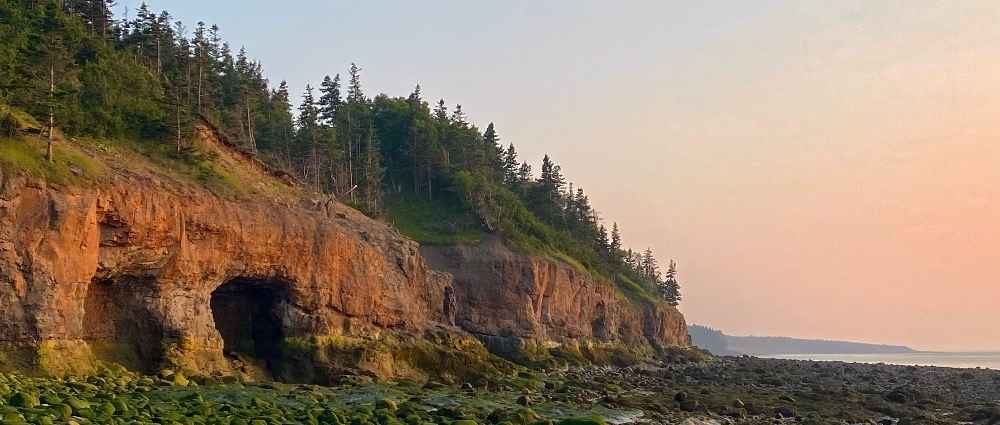
Researchers, students, practitioners, educators, and community members alike gathered at Mount Allison University in Sackville, New Brunswick, for the 2026 joint Atlantic Canada Coastal and Estuarine Science Society (ACCESS) and the Bay of Fundy Ecosystem Partnership (BoFEP) biennial conference. Held under the theme “Connecting Communities to Ocean Science,” the conference brought together approximately 90 participants for four days of presentations, discussions, posters, and community engagement focused on Atlantic Canada’s coastal areas and watersheds. The program featured 37 oral presentations, 17 posters, two plenary sessions, and a public town hall, highlighting topics ranging from ocean literacy, intertidal and subtidal ecology, management and restoration of dykelands and wetlands, fisheries status, environmental contaminants, and science-policy decision processes.
For the Environmental Information: Use and Influence research team, this year’s theme, “Connecting Communities to Ocean Science,” was particularly germane. Much of EIUI’s research focuses on how evidence, knowledge, and experience are shared across marine science-policy interfaces, linking researchers, communities, and decision-makers. The conference theme reflected many of the questions that drive this work: how stronger connections, meaningful engagement, and the co-production of knowledge can contribute to more informed, inclusive, and equitable environmental decision-making.
The conference opened with a plenary panel, “Connecting Collaboratively with First Nations Communities” featuring Melissa Moody (Fisheries Program and Consultation Coordinator, Mi’gmawe’l Tplu’taqqn), Lyle Vicaire (Anqotemug Maqamigew), and Tim Bernard (Mi’kmaq Environmental Consultant, Shared Earth Strategies). Through reflections on partnership-building, engagement, and community relationships, the panel offered perspectives on fostering meaningful collaboration with First Nations communities. The second plenary panel featured Kerri McPherson of Nova Scotia’s Department of Education and Early Childhood Development, who presented “An Innovative and Dynamic Program to Promote Ocean Literacy.” McPherson highlighted Ocean School, a digital learning platform that uses storytelling, immersive technology, and hands-on activities to connect youth with marine ecosystems and climate issues while fostering ocean literacy and environmental stewardship.
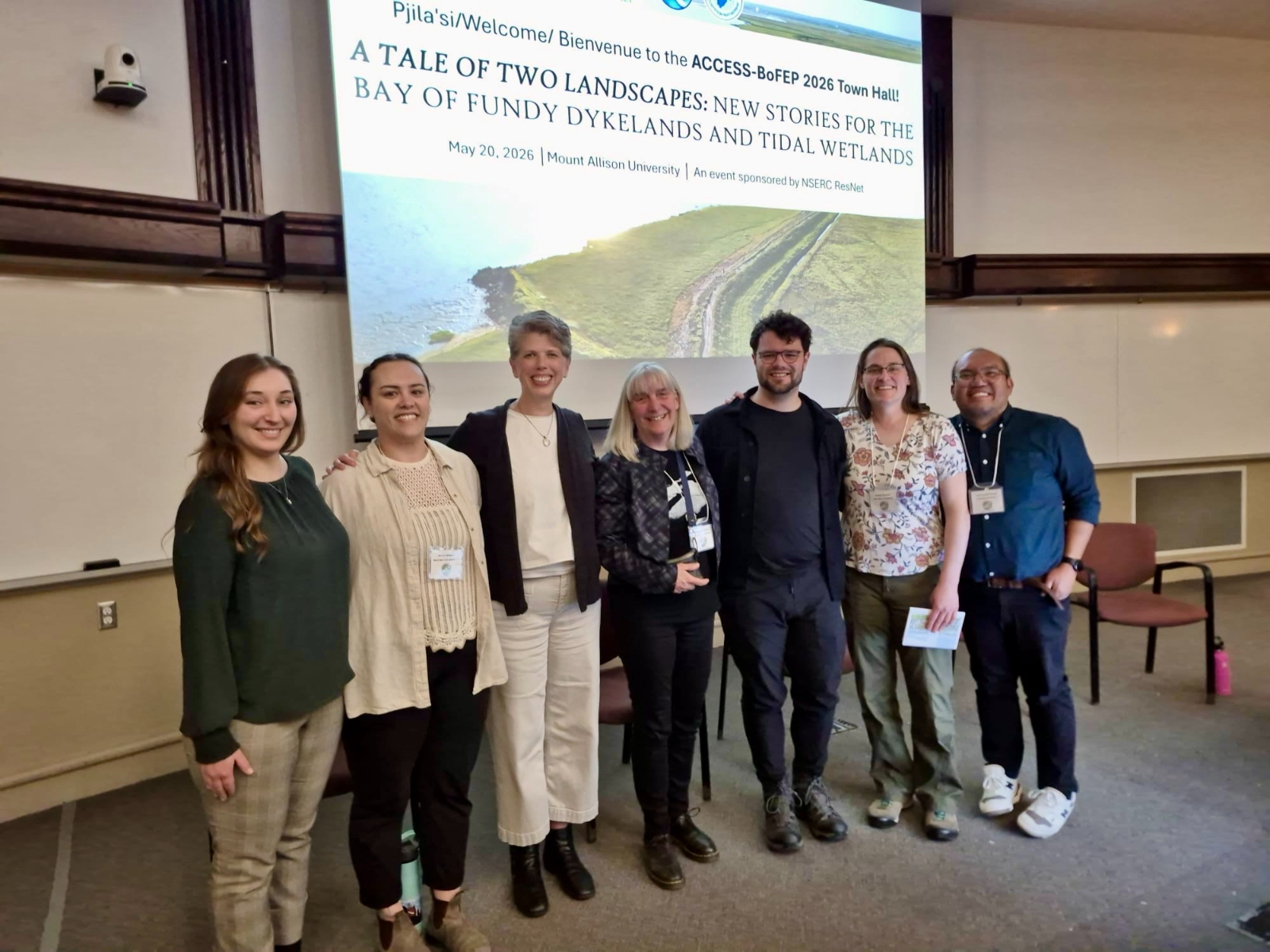
EIUI members contributed six presentations and two posters (see abstracts below). In addition, the conference’s town hall, “A Tale of Two Landscapes: New Stories for the Bay of Fundy Dykelands and Tidal Wetlands,” chaired by Dr. Kate Sherren (Director, School for Resource and Environmental Studies, Dalhousie University), showcased four speakers: Dr. Elson Galang (Killam Postdoctoral Fellow, Dalhousie University), Brittney Roughan (PhD student, Saint Mary’s University), Dr. Danika van Proosdij (Professor, Saint Mary’s University and Director, TransCoastal Adaptations) and EIUI member Alexandre Legault (MREM/MI student, Dalhousie University).
The reflections below capture ideas, questions, and contributions that members of our team brought to—and took away from—this year’s conference.
Team Reflections
 Most Interesting: The most compelling takeaway from the conference was seeing retired environmental professionals still actively engaged—a powerful reminder that this field is a lifelong commitment to adapting to industry shifts and evolving perspectives. This dedication was clear during the presentation of my colleague Erin Keast’s poster, An Audit of Evidence Transparency in Green Hydrogen Projects with Marine Impacts. Her research exposed a critical flaw in environmental assessments: while documents are openly available online, submission is often prioritized for compliance over clarity creating systemic weaknesses in data transparency and reproducibility. The study served as a sharp reality check on the urgent need to bridge gaps and foster proactive resolutions among fragmented stakeholders
Questions: Attending ecology-focused sessions as an MREM student with a limited background in natural sciences, highlighted a critical gap: specialized jargon often isolates adjacent fields. It made me wonder: how can we communicate highly technical natural sciences in a way that is easier to understand? I believe that prioritizing clear, inclusive science communication can strip away this complexity, effectively connecting communities who may benefit from knowledge sharing.
Contribution: Beyond expanding my exposure to ocean science, networking, and co-presenting a project, serving as a guest judge for two poster presentations was highly rewarding. It provided a direct opportunity to apply the foundational frameworks gained from both my graduate program and my current research internship with the EIUI.
~ Andrea Belen, Master of Resource and Environmental Management student, Dalhousie University
 Most Interesting: The most interesting thing about the 2026 ACCESS-BoFEP Conference was connecting with other ocean science researchers and professionals from across Atlantic Canada and finding unexpected opportunities for future collaboration. It felt like there was a lot of exciting interest around the science-policy interface. Folks across disciplines, especially in the natural sciences, touched on questions and topics that sit right at the heart of the science-policy interface and were highly relevant to topics that our EIUI team seeks to understand. This alignment felt very on theme for a conference centered on “connection,” and it was energizing to see our research objectives showing up organically across different sessions and conversations happening at the conference.
Questions: As a result of this interconnection of topics, the conference prompted two questions I’m still sitting with: (1) how can EIUI collaborate more with folks across ocean science (especially natural sciences), and (2) where does EIUI fit in keeping the observed momentum around science-policy interface research subjects going?
Contribution: My contribution to the conference was a research poster titled An Audit of Evidence Transparency in Green Hydrogen Projects with Marine Impacts. This project assessed 1,483 references extracted from seven Atlantic Canada green hydrogen project environmental assessment documents against a six-dimension transparency framework (accessibility, persistence, licensing and reuse, machine-readability, provenance, and equity and permissions).
~ Erin Keast, Master of Resource and Environmental Management graduate, Dalhousie University
 Most Interesting: This is my third time attending the ACCESS-BoFEP conference, and I can say it’s becoming a welcome tradition. More than a forum for presenting research results, the conference has become a genuine space for exchanging knowledge, experiences, and ideas, thanks to the atmosphere of trust that organizers and participants have cultivated. Although the conference focuses primarily on marine ecology, this edition dedicated nearly half a day—out of three—to marine governance, a significantly larger presence than in previous conferences. The careful organization of the presentation flow also stood out, allowing for seamless transitions between topics.
Questions: My attendance at the ACCESS-BoFEP 2026 conference led me to reflect on an ongoing challenge: how to build stronger bridges between scientific research and decision-makers. At a time when accumulated knowledge is vast, it is urgent to focus on its application.
Contribution: My own presentation illustrates this idea: starting from a specific problem, namely, the tokenistic participation of local actors in marine spatial planning. Then through a rigorous methodological design and multi-method qualitative design and case study, I developed a practical framework for local participation in marine spatial planning, thus offering a concrete support tool for those who make decisions regarding the management of our seas and coasts.
~ Daniel Martinez-Calderon, Interdisciplinary PhD graduate, Dalhousie University
 Most Interesting: I enjoyed the opportunity to reconnect with people I had met two years earlier at the 2024 version of the same conference in Saint Andrews, New Brunswick. I was curious about how their projects had progressed since we last spoke.
Questions: The conference made me think about what it means to implement equitable coastal adaptation decisions. It gave me a few ideas that I may include in my PhD application next fall.
Contribution: I presented the results and accompanying discussion of a project about how members of the Acadian diaspora may see themselves as stakeholders in coastal adaptation decisions impacting the Bay of Fundy’s dykeland system. I also had the pleasure of participating in my first-ever conference panel. Dr. Kate Sherren invited me to speak about my experience as a master’s student funded by the NSERC ResNet project, a Canadian network of faculty and students seeking to understand the provision of ecosystem services in six working landscapes.
~ Alexandre Legault, Master of Resource and Environmental Management and Master of Information student, Dalhousie University
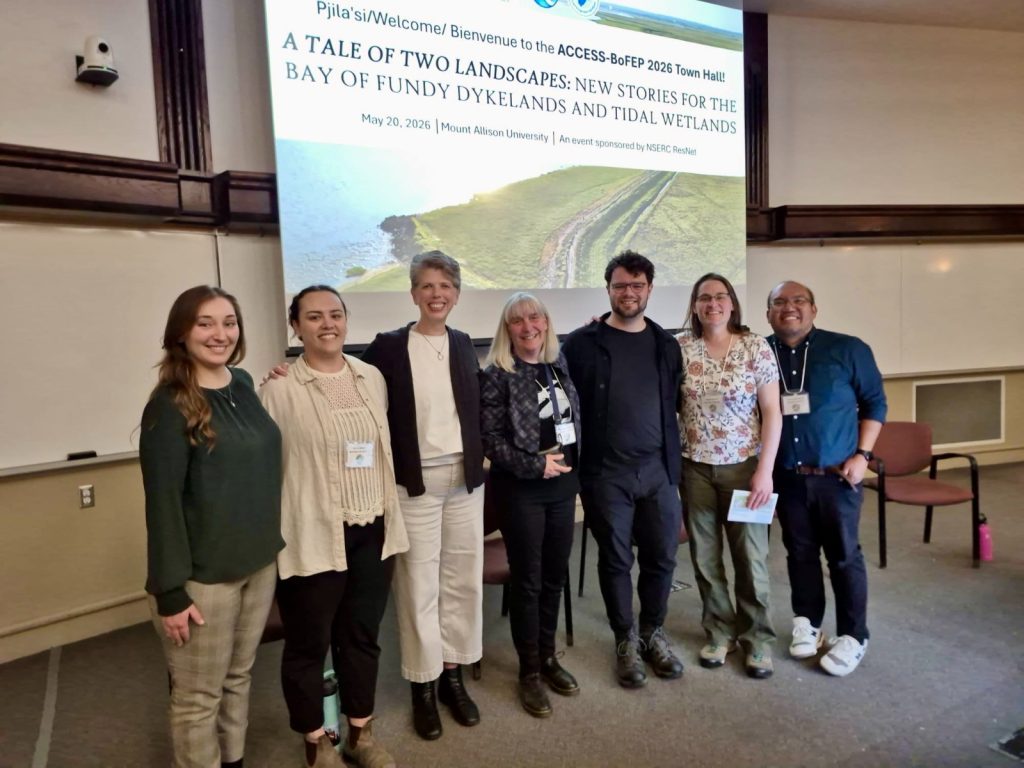
From left to right: Kayla Williams, Kendra Sampson, Kate Sherren, Danika van Proosdij, Alexandre Legault, Brittney Roughen, Elson Galang
 Most Interesting: I was most interested in the sessions that focused directly on connecting communities to ocean science in the Bay of Fundy. There is an abundance of amazing environmental, biological, and physical ocean research happening in the Bay and I think it is important that this research is accessible to coastal communities. I particularly enjoyed Kerri McPherson’s plenary about the Ocean School educational platform. I love that Ocean School offers free interdisciplinary educational resources that incorporate science, technology, storytelling, and local case studies. What an incredible tool for making ocean science publicly accessible!
Questions: I left the conference wondering how researchers can more effectively involve communities in ocean science and research. In what ways can researchers collaborate with coastal communities to ensure that ocean research aligns with community needs, capacities, interests, and goals? How can reciprocal collaboration between researchers and communities increase our understanding of Bay of Fundy environments?
Contribution: I presented initial findings from my master’s research on exploring place-based knowledge of benthic spaces in the Minas Basin. I believe my presentation provided a unique perspective on social-ecological contexts within the Bay of Fundy by describing the connections between people and the seafloor. People who live and work in coastal or marine spaces in the Minas Basin have incredible knowledge of the ocean which they have gained from observation and interaction with the natural environment. I hope that my presentation inspired others to consider how local knowledge is an asset for all kinds of ocean research.
~ Alison Emery Webster, Master of Coastal and Marine Management student, University Centre of the Westfjords (Iceland)
 Most Interesting: I learned a lot from the first panel of the day, “Connecting Collaboratively with First Nation Communities.” I appreciated the perspectives of each of the panelists, including how they manage consultation requests and the importance of relationship-building. Research tends to operate on short deadlines, but relationships to place are not restricted to a 3-5 year project cycle. Several other presentations brought up similar questions about trust, relationship-building, and co-production, including those from others in the research group—Dr. Daniel Martinez Calderon, Dr. Sandra Toze, and Alison Weber.
Questions: I left thinking about how I can build more authentic, genuine relationships with Indigenous and local communities in the areas that I conduct research. In every research setting, I come “from-away,” and it can be challenging learning local customs, cultures, and contexts. Dr. Elson Galang addressed this idea in his presentation about respectful, care-focused research with outsiders (researchers are the outsiders in this context). I want to make sure that the research I conduct or collaborate on is benefiting local peoples and non-human life.
Contribution: I presented on a chapter of my dissertation research about tracking cognitive and affective impacts from dam removal, titled “If you Make a River a Lake…”: Using Comparative Social Impact Assessment to Understand Resistance and Support for Barrier Removal and Tidal River Restoration.
~ Keahna Margeson, Interdisciplinary PhD graduate, Dalhousie University
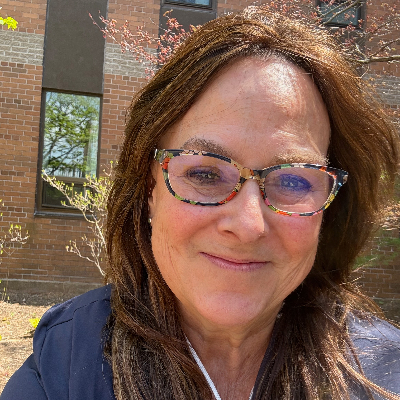 Most Interesting: I initially was very attracted to the conference theme “Connecting Communities to Ocean Science,” as communities are a core part of working to mitigate the impact of climate change. I appreciated the many ways the community theme resonated through the conference. The conference began with a very thoughtful and enlightening panel discussion highlighting how we can work collaboratively with First Nations communities, which included panelists from across the maritime provinces. The emphasis on relationships and weaving scientific and Indigenous knowledge from the start reinforced more inclusive best practices. It was very exciting to have so much of the first day focus on policy and communities, and social science approaches to understanding how we can shift policies and practice. The day ended with the launch of the film Sea, Soil, and Soul: the Evolving Bay of Fundy Coastline, an outcome of the TransCoastal Adaptations Research project. The connection to communities, and complexity between people, customs, culture and climate change emerged clearly from the film. The focus through the conference on ocean and data literacy also resonated with me, as these are core areas we are trying to address within the Transforming Climate Action (TCA) projects.
Questions: Questions that emerged for me are how to replicate these types of transformative experiences, when change requires building relationships, trust and time, as well as clear evidence. Conferences like this, by bringing together students, researchers, practitioners from varied backgrounds, allow for the sharing of diverse knowledge, and the creation of new ideas.
Contribution: I was happy to present on Co-Producing Research: How do Local Communities use Evidence to Inform Coastal Adaptation Policies? I highlighted our investigation into how ocean-climate action and policy can be transformed through better understanding of local communities, by focusing on the enablers and inhibitors of the flow of information and its use in climate policy development and implementation. I contributed to two posters – Understanding the Functions and Activities of Science-Policy Interfaces is Key to Connecting Communities and Ocean Science, and An Audit of Evidence Transparency in Atlantic Canada Green Hydrogen Projects with Marine Impacts.
~ Sandra Toze, Director, Information Programs; Associate Professor, Dalhousie University
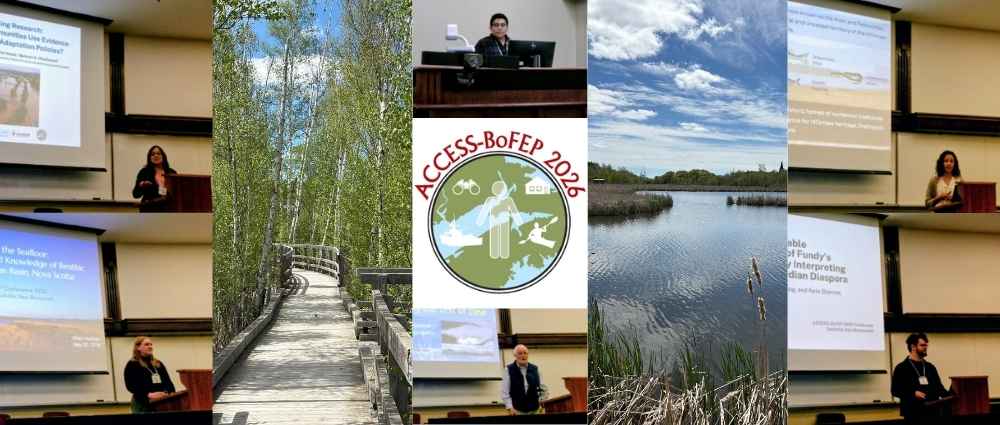
One particularly encouraging aspect of this year’s conference was the strong presence of students and early-career researchers. Their presentations, posters, and participation throughout the program reflected both the depth of emerging research and the growing interest in interdisciplinary approaches that bridge natural sciences, social sciences, policy, and community knowledge. As Peter Wells, Chair of BoFEP and member of EIUI’s research team, observed, it was encouraging to see so many students actively contributing to discussions about the future of the Bay of Fundy and its coastal communities.
As environmental challenges are often very complex, creating opportunities for dialogue and collaboration across disciplines, sectors, and communities becomes increasingly important. Conferences like the 2026 ACCESS-BoFEP meeting provide occasions to build these connections, share knowledge, and develop new ideas. We look forward to continuing these conversations, and to strengthening the relationships between communities, evidence, and decision-makers that are essential to developing resilient coastal communities and environments.
Conference Abstracts
Oral Presentations
Legault, A., Galang, E. I. N. E., & Sherren, K. – Understanding equitable decisions in the Bay of Fundy’s dyked landscapes: Interpreting the voices of the Acadian diaspora
Abstract: Set against the backdrop of competing imperial ambitions, the saga of the people of Acadie unfolds through a series of acts that evoke themes of resilience, fellowship, and survival. Just as the arrival of French settlers forever changed the Bay of Fundy’s cultural landscapes, so did the expulsion of their descendants, the Acadians. The Acadian people’s transnational migrations have led to the emergency of a diaspora—a group of individuals scattered across space who no longer inhabit their homeland. The Acadians left behind an extensive dykeland system; today, the multifunctional system is highly vulnerable to the coastal impacts of climate change. The purpose of this study is so examine whether Acadians living in Acadie, the “homeland,” and Acadia diasporans value the landforms of the Bay of Fundy’s dykeland system, and if so, whether they see themselves as stakeholders in managed dyke realignment (MDR) decisions. We surveyed (n = 56) and interviewed (n = 17) Acadians during the 2024 Congrès Mondial Acadien (CMA) at the Grand Pré National Historic Site and at the CMA’s expo in Yarmouth. Respondents described Acadian identity as multidimensional, valued different landforms of the Bay of Fundy’s dykeland system to derive the same benefit, and held different positions on whether they should view themselves as stakeholders in MDR. We find that Acadian identity is a key driver of perceived stakeholdership and that the benefits Acadians gain from the sykeland system come in landscape-driven bundles, regardless of their primary residence location or preferred language.
Margeson, K., Sherren, K., & Manuel, P. – “If you make a river a lake…”: Using comparative social assessment impact to understand resistance and support for barrier removal and tidal river restoration
Abstract: The Bay of Fundy sits between New Brunswick and Nova Scotia, Canada, and is characterized by its surging tides, which carry nutrient rich sediment up into the basins and connected rivers, supporting unique ecosystems and biodiversity. Peoples who settled around the Bay of Fundy reclaimed wetlands by constructing structural defenses, such as dykes and dams, which are now outdated, expensive to maintain, and often no longer in compliance with environmental regulations. Coastal communities who were at one time protected by this aging infrastructure are increasingly at risk from sea level rise, storm surges, and changing precipitation patterns. Barrier infrastructure requires re-examination considering modern values and technology that allow, or require, more socially and environmentally sound approaches for development.
Barrier removal is often locally contested, yet few studies focus on understanding local people’s experiences in dammed river landscapes. This research addresses this gap using a mixed-methods comparative SIA to explore the evolution of two dammed tidal river landscapes and local people’s responses to changes over time. Our study sites are the Petitcodiac River, where a causeway that dammed the river was partially removed and natural tidal flow re-established, and the Avon River, where causeway modifications are under consideration.
Findings from this work include: 1) landscape values in times of transition require an understanding of the past, expectations for the future and present uses and preferences; 2) indicators of restoration support for ongoing contentious decisions are measurable and strongest are landscape perceptions; and 3) comparative SIA effectively increases understanding of experienced impacts and acceptance over time during management changes. We can learn from the Avon and Petitcodiac cases to avoid inequitable patterns and make progress towards improving river restoration outcomes with benefits for human and non-human life.
Martinez Calderon, D., Manuel P., & MacDonald, B. H. – Reimagining marine spatial planning: A framework for fostering local stakeholder engagement
Abstract: This study started from a critique of Marine Spatial Planning (MSP) and its tokenistic inclusion of local stakeholders. This presentation will report the findings of research that aimed to develop a conceptual and operational framework to advance local stakeholders’ engagement in MSP, using the Scotian Shelf and Bay of Fundy (SSBF) planning area as a case study. The study employed a qualitative multi-method design integrating: a systematic literature review on the foundations of community-oriented planning and stakeholder engagement principles; interviews with MSP experts; and individual and focus groups sessions with local sectoral representatives to explore the four elements of effective participation (who should participate, how, when, and at what level of intensity). This was complemented by interviews with local experts to examine the contextual factors shaping public participation in the SSBF. The resulting framework comprises five dimensions. The first establishes the paradigmatic principles to reimagine a locally grounded MSP. The second highlights the central role of local communities in MSP. The third addresses how contextual factors shape both the possibilities and limitations of local stakeholder participation. The fourth outlines the practical elements for operationalizing local stakeholder engagement. Finally, the fifth dimension positions trust as a cross-cutting element that permeates the entire framework and is decisive for the success or failure of the participatory process. The primary contribution of this study lies in its solution-oriented approach: rather than focusing on the problem, it advances concrete a solution and demonstrates that local stakeholder participation in MSP is achievable and beneficial, for both the planning process itself and for the communities it affects.
Toze, S., Legault, A., Keast, E., & MacDonald, B. H. – Co-producing research: How do local communities use evidence to inform coastal adaptation policies?
Abstract: Coastal communities experience the adverse effects of climate change directly, e.g., sea-level rise and flooding. Local governments often have difficulty in considering the range of evidence related to the impact of climate change on their coasts. Yet much of the research on how science is incorporated into policy has focused on provincial/state, national, and international levels. In this presentation, we will highlight the current work of the Dalhousie University Environmental Information: Use and Influence research group, which over the past decade has been examining challenges experienced at the science-policy interface. Funded through Transforming Climate Action, we are investigating how ocean-climate action and policy can be transformed through better understanding of local communities, by focusing on the enablers and inhibitors of the flow of information and its use in climate policy development and implementation. We will outline our initiatives to ensure the research is grounded in the experiences of the policy and practitioner communities. We will describe a workshop we facilitated with 12 coastal adaptation practitioners in Nova Scotia, and how we are using the results to co-produce our research. The results have informed a protocol for a systematic map of the academic and grey literature on the use of evidence in local governance to support climate action. Additionally, the workshop results have informed the design of a case study of the Lunenburg County’s coastal municipalities, in which we will examine how municipal planners and policy-makers identify, interpret, and include information in their efforts to deal with the effects of climate change.
Watson-Wright, W., & Wells, P. G. – The United Nations Joint Group of Experts on the Scientific Aspects of Marine Environmental Protection (GESAMP): An ocean and coastal science-policy interface standing the test of time
Abstract: Established in 1969, GESAMP is a group of independent scientific experts providing advice to the UN system on scientific aspects of marine environmental protection. It is currently sponsored by ten UN entities. GESAMP conducts and supports marine environmental assessments; undertakes in-depth studies, analyses and reviews of specific marine topics; and identifies emerging issues impacting ocean health. GESAMP’s core group currently consists of 17 independent scientific experts, drawn globally from many relevant disciplines. Studies and assessments are carried out by dedicated working groups, members of which come from the broader GESAMP network, including Early Career Ocean Professionals where possible. To date, GESAMP has addressed a wide range of marine topics and produced 52 in-depth studies, 11 of which focus specifically on the coastal zone. Studies have involved more than 500 scientists from 50+ countries. GESAMPs core work is published as peer-reviewed reports in the on-line GESAMP Reports and Studies Series, and in scientific journals. GESAMPs scientific output on key topics (e.g., plastics, chemicals at the air-sea interface) is used widely by the UN, national governments, intergovernmental groups, nongovernmental groups and the scientific community, one paper having been cited approximately 2000 times. Given escalating concerns about the ocean, both as a recipient of impacts as well as in its role in planetary climate change, GESAMPs assessments and advice will continue to be needed now and well into the future.
Webster, A., & Manuel, P. – Living with the seafloor: Exploring place-based knowledge of benthic spaces in the Minas Basin, Nova Scotia
Abstract: People who live at the coast, and who work in and use coastal and marine spaces for recreation, have unique knowledge of the ocean, including the seafloor. Usually not visible from the surface or easy to reach, exploring, understanding, and using the seafloor required well-honed skills, frequently used by residents of coastal communities. However, local, place-based understanding of benthic spaces are often overlooked in benthic mapping, despite its importance for informing decision-making about the use and protection of the coastal and marine environment. Exploring and documenting the place-based knowledge accumulated by residents of coastal communities can contribute to a holistic understanding of benthic spaces and the connection of coastal communities with the seafloor. Using participatory mapping and semi-structured interviews with recreational and commercial users, this research explores local uses, perspectives, and interpretations of coastal and marine spaces, particularly the benthic environment of the Southern Bight of the Minas Basin seafloor, and the social, cultural, ecological, and economic significance of benthic spaces in the Minas Basin. Mapping tied activities, observations, and experiences to places, as well as documented observed changes. The results from this study can contribute to a holistic understanding of the seafloor, as well as provide insights to understand attachment to place in a changing coastal landscape. This knowledge can be used to support resilient coastal culture and livelihoods, enhance local decision-making, and inform protection strategies for benthic habitats in the Minas Basin.
Poster Presentations
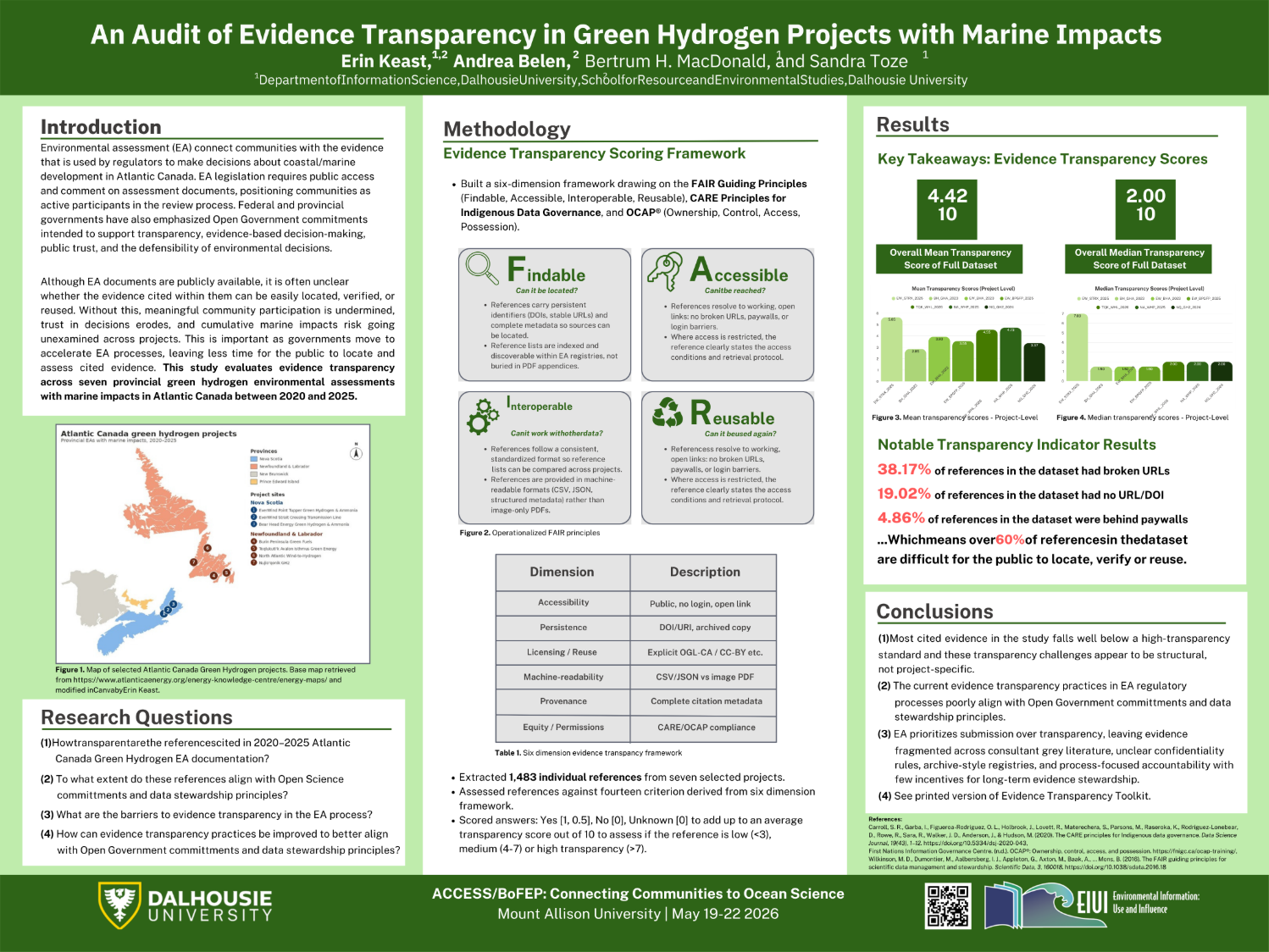
Keast, E., & Toze, S. – An audit of evidence transparency in Atlantic Canada green hydrogen projects with marine impacts
Abstract: Environmental assessment (EA) processes are intended to connect communities to the science and evidence used to inform decisions that affect communities, coastlines, and marine environments in Atlantic Canada. At both federal and provincial levels, EA legislation requires public access to assessment materials and opportunities for review and comment, positioning the public as active participants in scrutinizing the scientific evidence used to inform project decisions. However, less attention has been paid to whether the evidence provided in EA reports is documented in ways that allow it to be reliably located, verified, and reused by affected communities.
This study evaluates evidence transparency in seven provincial environmental assessments for green hydrogen projects with marine impacts in Nova Scotia and Newfoundland and Labrador (2020–2025). Using a systematic audit of 1,483 cited sources, the research assesses how evidence is documented across six dimensions: accessibility, persistence, licensing and reuse clarity, machine-readability, provenance, and equity and permissions.
Findings show that while EA systems are procedurally open, evidence transparency is often limited. Most citations lacked persistent identifiers, functional links, or clear reuse permissions, making evidence difficult to trace and evaluate (mean 4.36/10; median 2.0/10).
Improving evidence stewardship can strengthen transparency, support public engagement, and ensure decisions affecting communities, coastlines, and marine environments in Atlantic Canada remain evidence-based and defensible, particularly as our government aims to streamline EA processes and shorten approval timelines, increasing the importance of accessible, verifiable evidence for timely and meaningful public scrutiny.
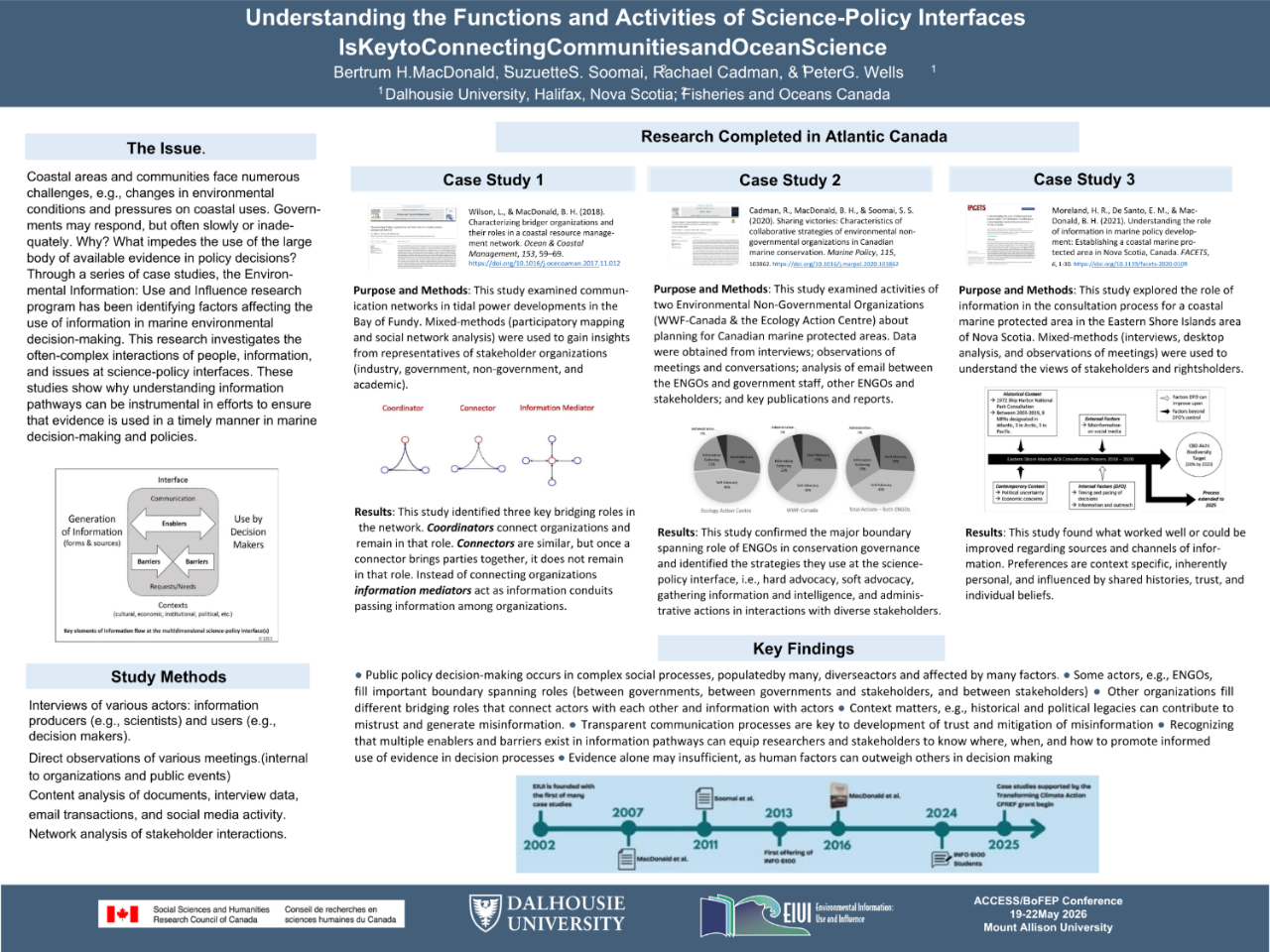
MacDonald, B. H., Soomai, S. S., Cadman, R., & Wells, P. G. – Understanding the functions and activities of science-policy interfaces is key to connecting communities and ocean science
Abstract: Coastal areas and communities, prominent at the land-sea interface, face numerous challenges, e.g., changes in environment conditions, pressures on coastal uses and services, and differences in policies and politics. Governments at all levels may respond to these issues, but often slowly or inadequately. Why? What impedes the consideration of the large body of available evidence in policy decisions? Through a series of case studies over two decades, the interdisciplinary Environmental Information: Use and Influence research program at Dalhousie University, an affiliated BoFEP working group, has been investigating factors affecting the use of information in marine environmental decision-making. Working collaboratively with governmental, intergovernmental, and non-governmental organizations, this research identifies factors affecting the often-complex interactions of people, information, and issues at science-policy interfaces. For example, in an initiative to establish a coastal marine protected area, historical legacies of mistrust of government and misinformation influenced the planning processes. In another case, environmental non-governmental organizations filled pivotal roles as boundary organizations facilitating information exchanges among stakeholders. A third case revealed that stakeholder organizations, acting as coordinators, connectors, or information mediators, bridged government, academic, industry, and community groups in a network about marine renewable energy. In other cases, the format of information, e.g., technical reports, briefing notes, and fact sheets, influences knowledge mobilization by difference audiences. These case studies show why understanding information pathways can be instrumental in efforts to ensure that evidence is used appropriately in a timely manner in decision-making and policies about the ocean.
Authors: Andrea Belen, Alison Emery Webster, Erin Keast, Alexandre Legault, Keahna Margeson, Daniel Martinez Calderon, and Sandra Toze
Images: Conference speaker photographs courtesy of Andrea Belen; New Brunswick landscape photographs courtesy of Sandra Toze; and Bay of Fundy landscape photographs courtesy of Jaime Walsh
Tags: Information Use & Influence, Marine & Ocean Issues, News, Public Policy & Decision Making, Science-Policy Interface, Science Communication